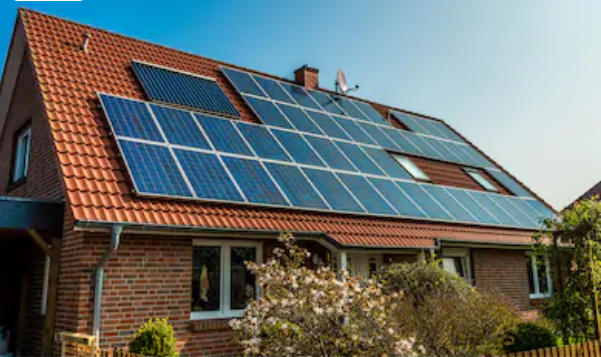
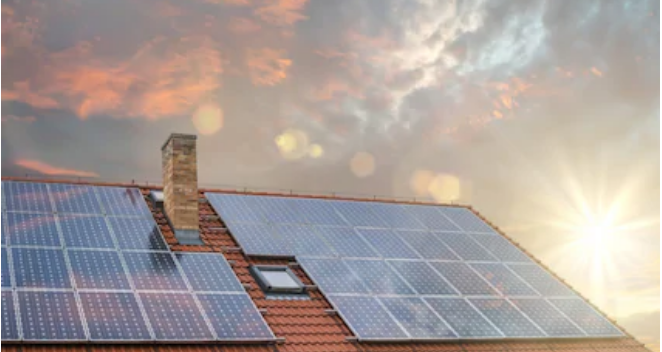
Book-sized solar panels could power a whole home in new breakthrough

In our efforts to make solar panels even more efficient, a team of scientists has found a way of funneling the sun’s power.

https://solarpowerrays.wordpress.com/

The technology around solar power is experiencing a major boom at the moment, with it now increasingly becoming cheaper to run than traditional fossil fuel energy sources in some instances.

But it is still a long way from achieving the efficiency we want it to, which has led a team of scientists to develop a pioneering new technique that could effectively ‘funnel’ solar energy in greater amounts than before.

In a paper published to Nature Communications, the team from the University of Exeter detailed its breakthrough, which could see the potential for three times the amount of solar energy generated than traditional systems.

Book-sized solar panels could power a whole home

This, the team believes, could see the creation of solar panels that are no bigger than a book being used to power an entire home.

“The idea is similar to pouring a liquid into a container – as we all know, it is much more efficient if we use a funnel,” said Adolfo de Sanctis, lead author of the paper.

“However, such charge funnels cannot be realized with conventional semiconductors, and only the recent discovery of atomically thin materials has enabled this discovery.”

Key Ingredient

The physicists achieved this major feat with a chip made from an atomically thin semiconductor called hafnium disulfide, which was oxidized with a high-intensity UV laser.

The team was then able to engineer an electric field that funnels electrical charges to a specific area of the chip, where they can be more easily extracted.

Breaking it down into figures, the new technique has the potential to convert around 60pc of the raw power of the sun into usable solar energy, compared with 20pc found in existing systems.

Until this technology can be implemented into existing panels, innovators such as Eden Full Goh are attempting to find ways of overcoming the challenge that Earth’s rotation around the sun poses for harnessing solar energy.

Source:

The Latest in Solar Technology

Solar Photovoltaics

Solar technologies have evolved a lot since they first made their debut in the 1960s. While previously solar photovoltaics (PV) were seen as a thing of the future, today, technological breakthroughs have positioned the industry for huge growth.

A series of new developments in solar PV technology also promises to contribute to the industry’s success.

Advances in Solar Cell Technology

Researchers have long looked for ways to improve the efficiency and cost-effectiveness of solar cells – the lifeblood of solar PV systems. A solar PV array is comprised of hundreds, sometimes thousands of solar cells, that individually convert radiant sunlight into electrical currents. The average solar cell is approximately 15% efficient, which means nearly 85% of the sunlight that hits them does not get converted into electricity. As such, scientists have constantly been experimenting with new technologies to boost this light capture and conversion.

Light-Sensitive Nanoparticles. Recently, a group of scientists at the University of Toronto unveiled a new type of light-sensitive nanoparticle called colloidal quantum dots, that many believe will offer a less expensive and more flexible material for solar cells. Specifically, the new materials use n-type and p-type semiconductors – but ones that can actually function outdoors. This is a unique discovery since previous designs weren’t capable of functioning outdoors and therefore not practical applications for the solar market. University of Toronto researchers discovered that n-type materials bind to oxygen – the new colloidal quantum dots don’t bind to air and therefore can maintain their stability outside. This helps increase radiant light absorption. Panels using this new technology were found to be up to eight percent more efficient at converting sunlight.

Source: http://www.altenergy.org/renewables/solar/latest-solar-technology

Solar Electricity for Home

Solar Energy Every day

What is Solar Energy?
Solar energy by definition is energy derived from the sun. The energy can be used straight to heat, and light homes or it can be transformed into electricity by means of solar power technologies like solar panels. Societies are progressively devoting in solar energy to save on expenditures and get free of hazardous and costly power lines.

Renewable Energy

The worldwide hike in energy rates has led many to find a substitute and viable energy sources. There are many alternatives available nowadays comprising hydropower, wind, and solar.  Solar is the most popular because sunshine is everywhere, and almost everyone can learn to capture its power to perform tasks like cooking, lighting, heating, and many other household chores. The reasons for many people spend in harnessing the sun is for heating water in homes and get the energy to generate electricity.

Advantages of Solar Energy

  • Renewable and unlimited
  • Non-polluting
  • Economical
  • Adaptable 
  • Easy installation 
  • Easy maintenance
  • Solar energy is clean
  • Works everywhere
  • Works for everybody
  • Solar energy creates jobs

Solar power systems produce clean, pure energy from the sun. Setting up solar panels on your home helps to get rid of greenhouse gas emissions and lessens our collective reliance on fossil fuel. Our source of electricity is from fossil fuels such as coal, petroleum and natural gas.

What is solar energy used for today?

The most common form of solar energy used today is photovoltaic solar panels, which absorb the sun’s light to create electricity. These solar panels can be attached to homes as a primary or secondary source of electric power.

Types of Residential Solar Electric Power Systems

Three types of residential solar electric power systems. These three kinds differ in how thoroughly connected they are to the common power utility infrastructure, known as the grid.

  • Grid-tied
  • Grid-tied with battery backup
  • Off-grid

Why is solar good for the environment?

Solar Power is Clean Power. If you wish to lessen your carbon footprint to help protect the environment, going solar is one of the most effective ways to do this. Solar is good for our environment. Solar reduces greenhouse gas emissions because the electricity that solar panels produce have zero emissions.

Environment-Friendly Energy

What are the negative impacts of greenhouse gases on the environment?

Solar Energy is Saving The Earth

The harmful effects of the presence of greenhouse gasses in the atmosphere are global warming, climate change, ozone depletion, sea level rise, adverse effects on biodiversity etc. Therefore, our prime responsibility is not to promote any industrialization which enhances carbon emission, rather than reduction.

So let’s start with the basics on how a solar panel system works and the benefits. Then we’ll begin to install in our homes and help save for electricity bill and most important is to save the environment for the future generation